
Introduction
As software engineers, we're accustomed to having a high degree of control over our work; the final result typically hinges on our own code and decisions.
Moving from a senior position into a leadership role, however, demands a fundamental change in perspective. Your focus shifts from being an individual contributor to acting as a force multiplier for your entire team. Helping others succeed and ensuring the overall success of projects becomes your primary objective.
Consider a scenario that many encounter after spending some time in a senior role.
The Risk of Stagnation in a Senior Role
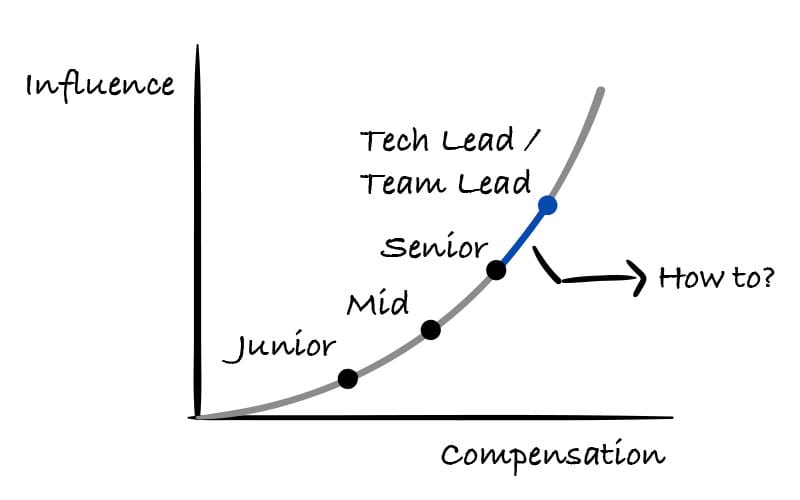
Reaching the senior level is an exciting milestone. Initially, your focus is on mastering the required skills and continuing your learning curve.
But as time goes on, you might find yourself feeling stuck at this level, with growth seemingly plateauing. This is a common experience; many engineers are unsure of the concrete steps needed to transition into a tech lead or team lead position.
I have personally faced this hesitation, delaying my own move to the next level. Looking back, I realize my growth stagnated because I lacked a clear understanding of the path forward and was overthinking my career trajectory.
Continuous growth is vital; without it, you risk stagnating. The field of software development offers countless avenues for development, many of which extend beyond purely technical skills.
Before exploring growth strategies, it's important to clarify the distinction between two common leadership roles.
Tech Lead vs. Team Lead
While the specific responsibilities for each role vary between companies, some fundamental differences exist. A Team Lead role primarily centers on people management, while a Tech Lead role focuses on steering the technical vision and guiding implementation.
Many organizations utilize one or both of these roles. In my own teams, I prefer having both positions filled. Which one is right for you? The choice is personal; either role serves as a solid foundation for various career paths, including engineering management, the individual contributor (IC) track like Staff Engineer, or software architecture.
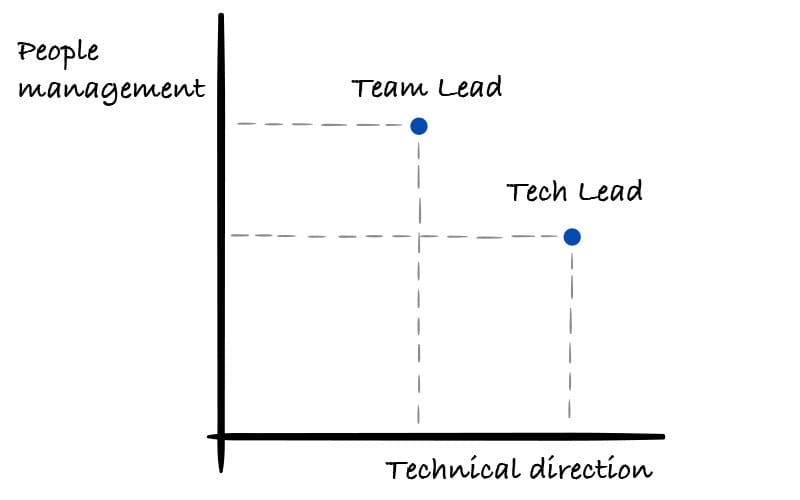
Given its people-centric nature, the Team Lead path provides an advantage for moving into management. Conversely, the Tech Lead role lends itself well to the IC and architecture tracks. However, the skills you develop in either role are highly transferable across all paths.
Let's now delve into my top recommendations for advancing into a lead role. These insights and steps are drawn from my personal journey from engineer to leader, as well as my experience as a manager promoting engineers into these positions.
Communicate Your Ambitions to Your Manager
This step is crucial. If your manager is unaware of your professional goals, they cannot create opportunities for you to demonstrate the skills required for a leadership position.
Use your 1:1 meetings to express your interest in a lead role, ask for guidance on the path forward, and discuss how you can achieve that goal. A more proactive approach is to have already started developing and showcasing these skills, and then inform your manager of your progress.
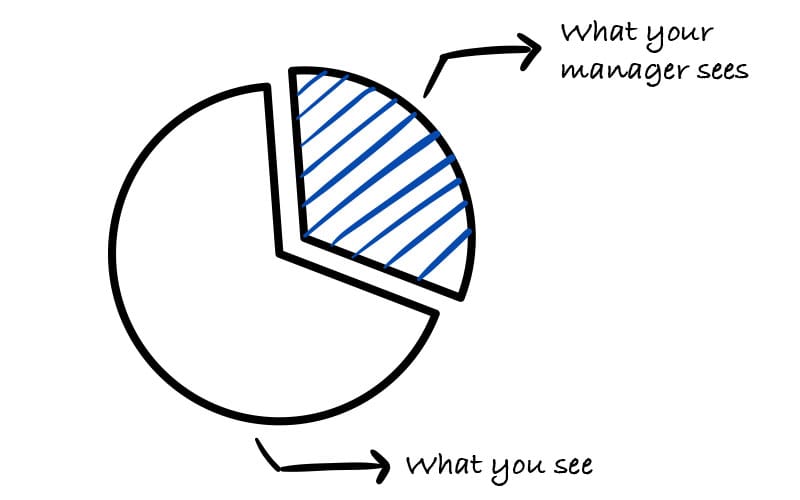
It's also worth remembering that your manager has limited visibility into your daily work. Therefore, it's essential to diligently track your accomplishments. This brings us to our next point.
Maintain a "Brag List" of Your Achievements
I strongly advise keeping a record of your wins and significant contributions. The rationale echoes the previous point: your manager is likely not tracking every success you have.
By maintaining your own detailed notes, you will be fully prepared for salary or promotion discussions. You will have a concrete list of reasons why you deserve the advancement.
Have you successfully onboarded a new engineer? Are you mentoring peers? Did you play a critical role in a major project's delivery? Document all of these achievements; it will be an invaluable resource for you down the line.
This is a practice I still follow today as a CTO. I keep a running list of my wins in Notion as bullet points. Since I use Notion for all my notes, I always have this information at my fingertips when questioned about my achievements.
This is a valuable habit for anyone in any role, not just those aspiring to leadership. It's a powerful way to demonstrate your value and advance your career.
Become the Subject-Matter Expert
Do you have a particularly strong grasp of a certain technology, library, or domain? Take ownership of it and help your colleagues become more proficient in that area.
Position yourself as the person others come to for help. This could involve writing documentation, preparing learning materials, or conducting thorough code reviews specifically in your area of expertise.
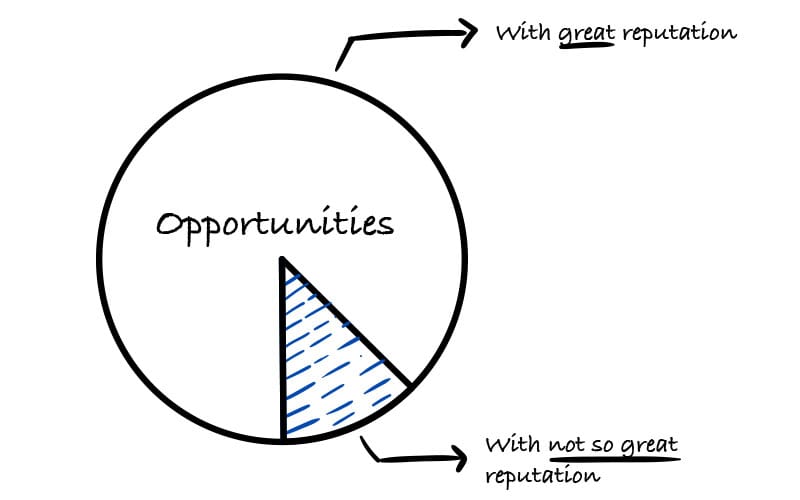
Your contributions in this regard are a significant multiplier for the organization, as they elevate the skills of everyone around you. This is the very essence of effective leadership.
This single step alone can open doors, as you build a reputation as a responsible individual who not only gets things done but also invests in the success of others.
Take the Lead on a High-Impact Initiative
Identify and propose a significant improvement to the codebase. If the proposal is accepted, volunteer to lead the project's implementation, which immediately positions you as the lead for that effort.
The greater the impact of the change, the greater its value. Leading a successful implementation is a strong factor in favor of promotion. Moreover, you will gain invaluable firsthand experience in leadership, negotiation, and navigating a project to completion, while building a reputation for effective execution.
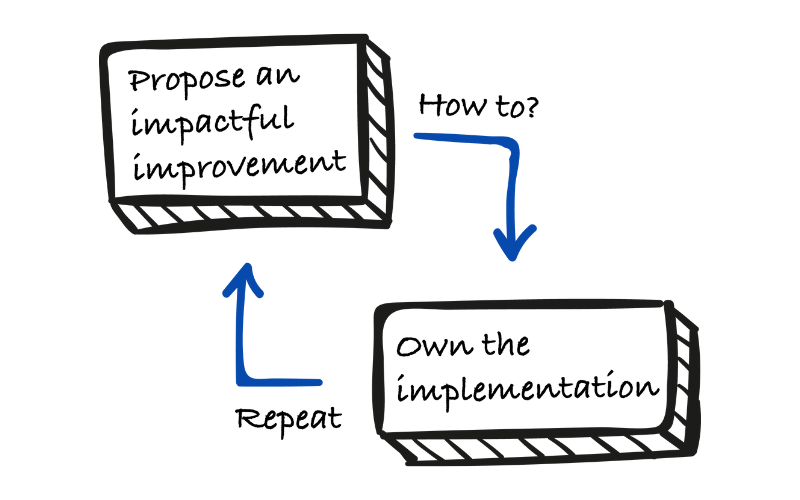
This is a particularly powerful move, as managers are often looking for people who can take vague, undefined requirements and deliver a precise, effective solution with autonomy.
Cultivate a Product-Minded Perspective
Understanding how engineering work translates into business value and customer delight is one of the most impactful things you can do.
Being both technically proficient and commercially aware makes you extremely valuable. You can bridge the gap between what is technically possible and what is strategically needed.
Asking "Why are we building this?" before starting a task is a powerful question. It provides vital context and motivation behind the work.
Curiosity about the product and business enables you to craft technical solutions that genuinely resonate with users.
To assist you in this endeavor, I've curated a list of questions you can employ.
🎁 Notion Template: Questions to Ask Before Making Technical Decisions
This list contains over 35 product/business and technical questions designed to uncover the underlying "why" behind a feature request.
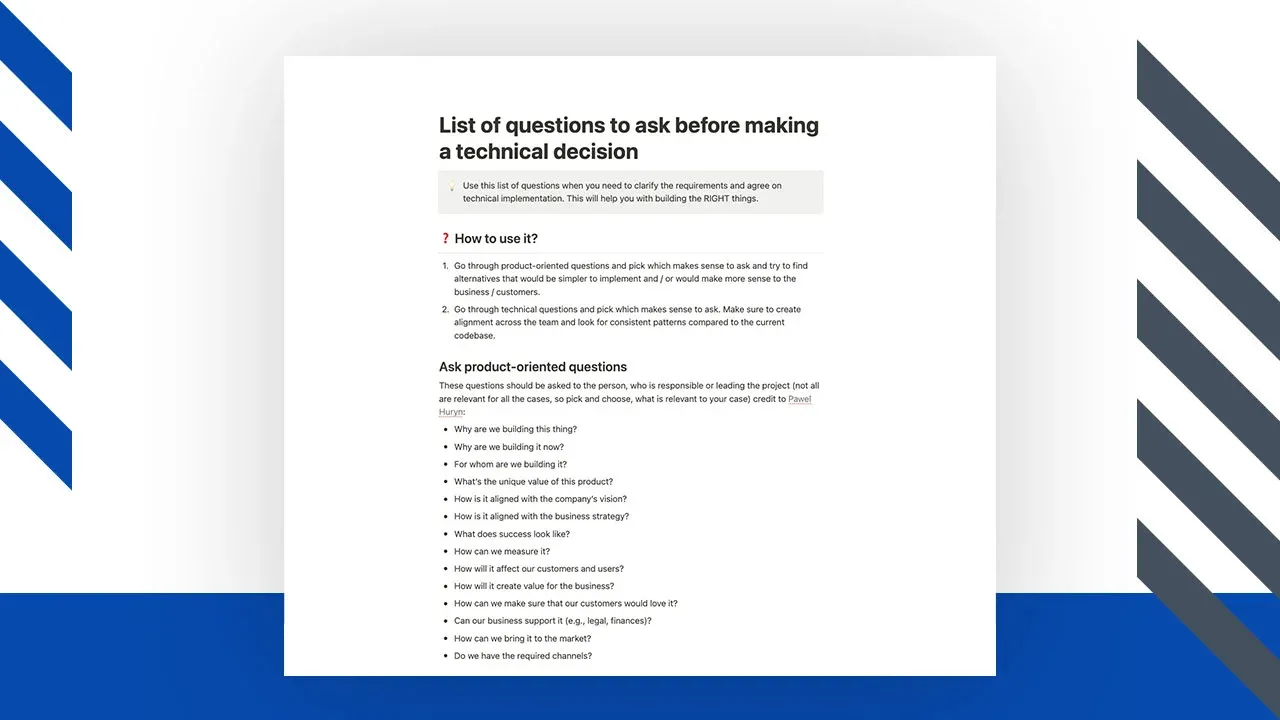
You can access the template here: 🎁 Notion Template: List of questions to ask before making a technical decision
Start Writing Online
The benefits of regular online writing are numerous, and this practice has been incredibly valuable to me. It allows you to help a broader audience while simultaneously solidifying your own understanding. It also contributes to your personal brand and positions you as an authority in your niche.
To move from a Senior Software Engineer into a lead role, you must demonstrate your leadership potential and your ability to guide a team successfully.
Regularly publishing content that shares your knowledge is immensely helpful in proving your skills, especially if you also take the opportunity to write about leadership topics.
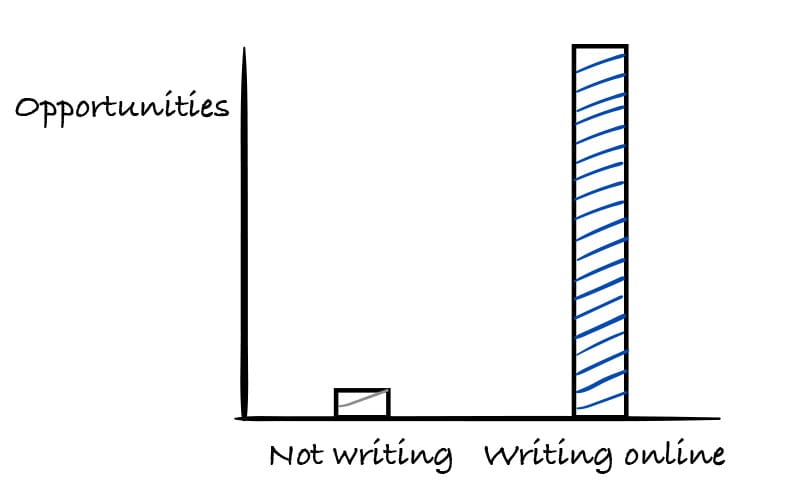
I often say that strong writing is a superpower for engineers.
- Providing substantial context with few words.
- Creating documentation that is simple to read and understand.
- Performing constructive and insightful code reviews.
These skills translate directly into writing better code, as the underlying mindset is identical.
Insights from the Community
I reached out to my LinkedIn network and asked for their #1 tip on moving from Senior to Lead roles. The response was fantastic. Here are some of the best suggestions:
"Sitting back and not asking for feedback is the worst thing you can do as an engineer. If you want to improve, there has to be a constant feedback loop."
— Ankur Tyagi
"Become the go-to person for your engineering product area."
— Caleb Mellas
"Ask for feedback on what to do to get better. Ask for support. Be patient."
— Daniel Lock
"The brag list will also help jog your memory for writing resumes and answering behavior and technical deep dive interviews."
— Mike Thornton
"Find opportunities and ask for them instead of waiting to be given."
— Anemari Fiser
"Take ownership and be a self-starter (i.e., can work with minimal supervision, brings new ideas to the team)."
— Markus Kaufmann
"Understand what it means to lead people. It’s not the same as being a craftsman at your current role. It is about people and caring."
— Tim Ward
"Develop further into becoming a safe pair of hands releasing to Prod, Looking after Prod and Designing systems."
— James Parra
Final Thoughts
There are countless strategies to facilitate your growth into a leadership role. Whether you choose one of these or combine several is entirely up to you.
Bear in mind that the more you consistently showcase your capabilities, the faster you will be recognized as a strong candidate for the role you desire.
Further Reading
For more insights, I recommend the Engineering Leadership newsletter, where I publish tips and advice on excelling as an engineering leader. I release two new articles every week!