Throughout "Angular Week," Nx highlighted their support for Angular, featuring testing tools, architectural rules, and the newly official Rspack integration. At the same time, a fresh PR suggests marking *ngIf, *ngFor, and *ngSwitch as deprecated, steering developers toward @if, @for, and @switch, with an automated migration slated for Angular 20.
AMA with Minko Gechev
Angular’s product lead, Minko Gechev, hosted an Ask-Me-Anything session on LinkedIn. Below are a few highlights from his responses.
- It’s highly unlikely that Zone.js will disappear.
- The initiative to make RxJS non-essential is still underway.
- There’s no plan for Angular to adopt Rspack; they believe Vite with esbuild is equally capable. On top of that, they advise against relying on custom Webpack plugins.

#angular #typescript #programming #webdev | Minko Gechev | 232 comments
Drop your questions for the Angular team in the comments section below 👇 #angular #typescript #programming #webdev | 232 comments on LinkedIn

"Angular Week" at Nx
Nx, a tool that serves as an alternative to the Angular CLI, hosted an "Angular Week" during which it released multiple pieces of writing showcasing its work within the Angular ecosystem.
A particular post delved into Nx's support for contemporary testing tools, including Playwright and Vitest. In the case of Vitest specifically, community backing has been significant, with contributions coming from individuals such as Brandon Roberts and Younes Jaaidi.
Modern Angular Testing with Nx | Nx Blog
Discover how Nx supercharges Angular testing with built-in support for Playwright and Vitest, boosting performance, stability, and CI efficiency.

In a separate update, the team shared an older piece once again: Enterprise Monorepo Patterns. This book, which first appeared in 2018, remains one of the most frequently referenced guides for enterprise-scale design.
Enterprise Angular Monorepo Patterns | Nx Blog
A fresh edition of the Enterprise Angular Monorepo patterns book is now available.
An Rspack-related article also made the rounds. Since the Angular CLI serves as the public interface, the switch to esbuild went largely unnoticed by most developers.
However, custom webpack configurations are frequently seen in larger projects. Rspack brings webpack-level compatibility at esbuild-like performance, which simplifies reusing current setups.
Although the Angular team has no intention of adding Rspack support, Nx has stepped up and formally assumed responsibility for Angular integration, building on Colum Ferry’s initial contributions.

Using Rspack with Angular | Nx Blog
Discover the rationale behind adopting Rspack for Angular projects, and how Nx's ongoing development makes this integration possible.
On top of that, Nx addressed their ESLint rules for enforcing architectural limits, such as encapsulation and module separation.
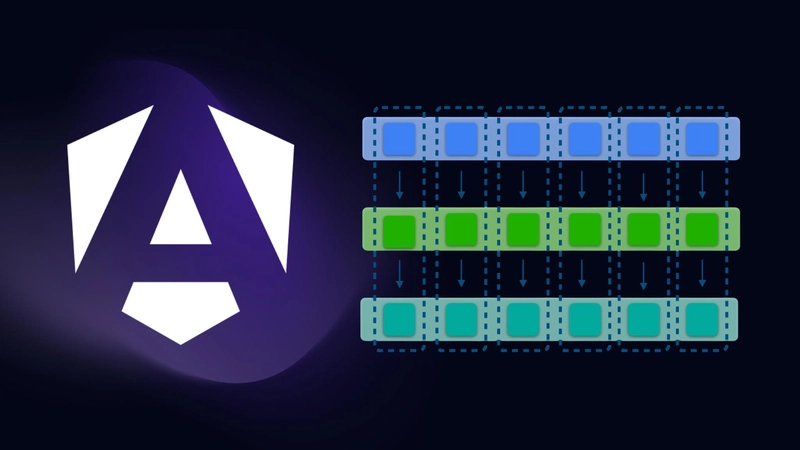
Angular Architecture Guide To Building Maintainable Applications at Scale | Nx Blog
Discover how domain-driven design, well-defined boundaries, and Nx tooling enable you to create Angular apps that scale cleanly, improving code maintainability and fostering smoother teamwork.
Deprecation PR for *ngIf/For/Switch
The structural directives *ngIf, *ngFor, and *ngSwitch may be approaching the end of their era.
Matthieu Riegler from the Angular team has authored a PR that suggests marking them as deprecated, steering users toward the newer control flow constructs: @if, @for, and @switch.
Is this purely cosmetic? No—there are substantial benefits. The legacy directives inflate bundle size, the modern approach offers better performance, and *ngFor harbors a subtle memory leak.
Deprecation is not an outright removal—these directives would continue to function. However, should the PR gain approval, Angular 20's ng update would execute the migration automatically.
 refactor(core): Deprecate the `ngIf`/`ngFor`/`ngSwitch` structural directives
#60492
refactor(core): Deprecate the `ngIf`/`ngFor`/`ngSwitch` structural directives
#60492

With the introduction of the control flow @-blocks in v17, we are now deprecating the structural directives ngIf/ngFor/ngSwitch in v20. This move is part of our broader effort to unify and streamline how templates are authored.
What was previously known as the control flow schematics is now transformed into a migration that runs automatically as part of ng update.
Important clarification: this deprecation is not targeting structural directives in general—only the trio of ngIf/ngFor/ngSwitch is affected.
DEPRECATION NOTICE: ngIf/ngFor/ngSwitch are now deprecated. You should switch to the control flow blocks @for/@if/@switch instead.
If you're wondering why we aren't supporting both approaches:
- When an app relies on both structural directives and control flow blocks, it ends up downloading both implementations, which increases the bundle size.
- The newer control flow block introduces a fresh reconciliation algorithm that brings performance gains, as demonstrated in these benchmarks: https://krausest.github.io/js-framework-benchmark/current.html
- The
ngFordirective has a subtle memory leak issue (#36878), which is already resolved in the new @for implementation.
Matthieu Riegler has long been one of Angular's most prolific contributors, but this was all done in his spare time. Now, as of last week, he has announced that he is officially a full-time contractor dedicated to Angular. This is a win for everyone involved.
Contracting role with Google on Angular tooling and docs—here’s the announcement from Matthieu Riegler, with 75 replies.
Overjoyed to confirm my new contracting position with Google, where I’ll concentrate on Angular’s tooling and documentation! My sincere thanks go out to all those who helped turn this chance into reality. On top of that, the community can count on my continued active participation—this news only strengthens that commitment. | 75 LinkedIn comments
linkedin.com