
Planning and delivering software projects is not rocket science.
It just requires clarity about what you are doing and what outcome you are targeting.
Here is a pragmatic playbook for sidestepping the most frequent mistakes in business planning, management, and development work — plus concrete advice for escaping the destructive cycle that keeps many teams stuck.
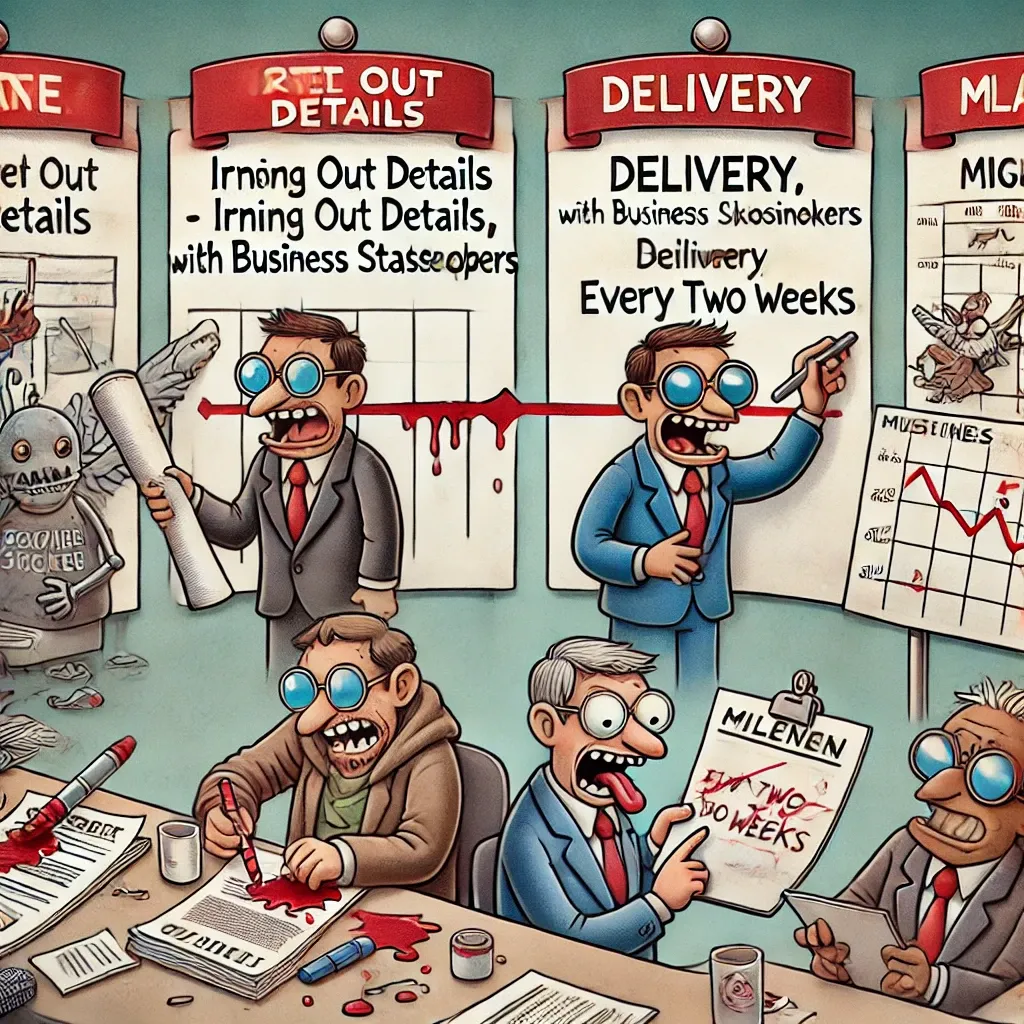
Steering Clear of the Most Common Team Mistakes
Clarify Every Detail Early
- Begin at the top - Align with higher business on their vision and goals from an engineering standpoint.
- Work through every business layer until each relevant stakeholder has been consulted.
- Get designers involved early, but have your leads review the designs first — this prevents committing to deliverables that are not feasible in practice.
Foster Relationships Rooted in Trust
Years of collaborating with technical managers have taught me a simple truth: trust is what keeps the entire delivery engine running.
The strongest managers never ask for hour-by-hour breakdowns. They let the team set a workload that feels right, knowing full well that shipping results matters more than filling in tracking spreadsheets.
The mechanism is straightforward, nothing fancy:
- Whenever velocity dips, they first examine the process and any obstacles in the way, not the people.
- When the process is solid but issues persist, only then do they look at individual performance, and only if there is genuine evidence of someone not pulling their weight.
Once this kind of trust is in place:
- Team morale climbs, and everyone aligns around shared objectives.
- Anxiety levels go down because the team is not suffocated by micromanagement.
- People feel ownership of their output without the fear of arbitrary, unrealistic deadlines.
Earning Management’s Trust as a Developer
Building credibility is not an overnight process, but it is not complicated either. What is required is demonstrating that you are dependable, honest, and that you care about the project's success just as much as they do. Here is the playbook:
Speak Up Early and Often. Do not wait until issues have escalated. Flag risks, roadblocks, and potential slippage the moment you spot them. Management will value your transparency.
Justify Your Judgments - If you say, “We need two more weeks,” be ready to explain the reasoning. Outline the alternatives: “We could skip some steps to hit this date, but the quality will suffer and we’ll pay for it in rework.” A clear presentation shows you are thinking about the long-term health of the project.
Stick to Your Commitments. There is no faster way to build trust than to follow through. Start with small wins — secure those early milestones, even if they are modest. Consistent reliability is key.
Be Honest, Even When It’s Awkward. If part of the project is going poorly, say it outright. Smoothing over bad news to avoid friction just creates bigger headaches later. Management needs the confidence that when you say “we’re on track,” you mean it.
Show Interest in the Larger Objective - Don’t just talk about the technical details. Show that you understand how your work influences the product, the users, and the business metrics. This proves you are more than a coder — you are invested in the venture’s success.
Help Them Score Wins. Acknowledged truth: managers love sharing good updates. When your team nails a significant milestone, make sure it gets reported up the chain. Let them enjoy the recognition. Your value grows when they know they can count on you.
Breaking the Cycle of Doom as a Manager
If you have been around IT long enough, you have seen the recurring issue: expectations that are set too high lead to project failure.
It often starts harmless but quickly escalates:
- Unrealistic targets are agreed upon.
- Anxiety increases, productivity drops.
- Code quality suffers.
- Defects mount; rework expands.
- Timelines slip, and leadership goes into panic mode.
- The added pressure falls back on the development team.
- This repeats until morale is destroyed.
This vicious circle continues until you take deliberate action:
- Avoid making exaggerated promises to upper management.
- Refuse to treat rough estimates as fixed commitments.
Once that is corrected, the cycle is broken, allowing your team to build solid software without demoralizing levels of stress. And if progress does slow down, you will be better positioned to pinpoint the actual root cause.
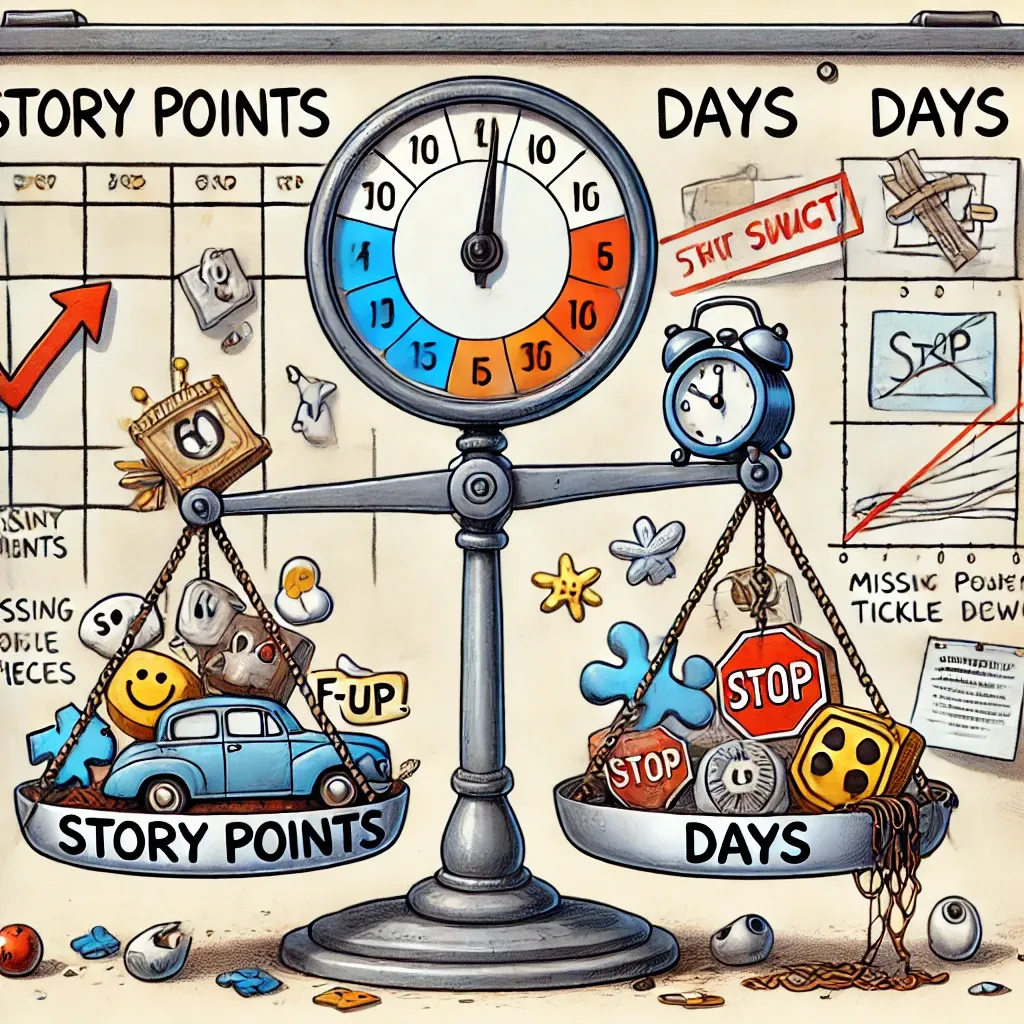
Story Points or Days: What Should You Use?
Now that your process is healthy, you can focus on planning. You now have to make a key choice: Story Points or Days. Picking the wrong one might trigger that very circle of doom we just talked about — or maybe save you from it.
Choose Story Points When...
- You operate in an Agile environment that puts a premium on steady, repetitive delivery rather than hard production deadlines.
- Leadership genuinely accepts that Story Points represent effort and size, not clock time.
- It is widely understood that velocity becomes predictable after a handful of sprints, and nobody is quietly converting those points into working hours for comparison.
Watch out, though:
- Story Points backfire if the concept is twisted. When business people are constantly asking, “Okay, so 20 SP equals how many working days?” then your attempt to use points has already failed. In that scenario, simply go back to days/hours.
Choose Days When...
- Meeting the deadline is the single critical driving factor, and the business expects estimates based specifically in units of time.
- Staff are not interested in Agile terminology; they just want a simple, direct schedule.
But proceed with caution:
- Estimating in days can easily lead to overpromising. Ensure you inflate the timeline a little to absorb unexpected complexity or late surprises.
The Golden Rule - Shipped Work is the Only Metric Worth Tracking
After spending 10+ years engaged with various clients, one common theme consistently stands out for me:
- The only metric that matters in the end is the work you actually delivered.
Forget about checking the log of hours spent or monitoring the number of tickets moved in Jira. The real focus should be on whether your team keeps shipping meaningful features that move the product forward.
In cases where delivery starts to slow:
- Begin by scrutinizing the process and available blockers first.
- It’s only after they are sorted out that you can definitively check if a specific individual on the team might be underperforming.
This mindset treats the team as one cohesive system, instead of a scattered set of isolated resources. When work slows down, it is often because the process is failing — very rarely, it's because a people are failing.
Side note:
Honestly, in many cases, software engineers are not the issue - slowdowns and chaos are typically the byproducts of poor business decisions at the top and a chaotic management style.
Key Advice for Business and Management Teams
- Stop seeing every estimate as a binding contract written in stone. If you take a more flexible stance on estimates, you allow the team enough room to handle unexpected complexity.
- Take cues from developers and team leads - Rely on the team’s ability to execute without constant oversight. When developers feel trusted to do their job, they produce their best work and morale stays high.
- Keep improving your process continuously - Focus on fixing the system, not on playing the blame game. Even when certain developer is struggling, it’s usually a sign that something is broken at the broader level.
Time for a quick wrap-up!
Generally, estimations become painful whenever they are treated the same as hard commitments. Your team is capable of being productive without fictional estimates that barely make sense, anyway. However, if you have no choice but to label your work in one of two ways 👇
- Story Points are the better fit for Agile teams focused on continuous delivery flow, providing the business side fully buys into the methodology behind them.
- Days make more sense when you are dealing with projects dominated by firm deadlines where precise tracking is essential. Just remember to always build in a cushion to avoid overpressuring the team.
- Relying on trust and a strong process will always outperform micromanagement.
Make sure shipping real, working software is the core of your company culture!
Here is the hope that you are now able to spot these classic errors from far away — and that you have all the necessary tools to prevent them.
At the end of the day: put your faith in the team, question your own process, and stop that circle of doom.
And go make healthy profit, stress-free. 💰