Luck is what happens when preparation meets opportunity. — Seneca
Hi, I’m Max. And I’m lucky.
A few months ago I returned from AngularConnect, where I gave my final talk of the year. It’s the largest Angular conference in Europe, drawing over 1000 attendees. Earlier this year, I also spoke at NgConf, the biggest Angular conference globally, along with several smaller events. Before that, I had zero conference speaking experience.
The Angular In Depth publication, which I founded less than two years ago, has grown into the most widely read online destination for Angular developers. This year we saw a 300% increase in readership and passed the 700k monthly views milestone. A dedicated team of contributors helps me run it, and we’re closing in on a million monthly views. I had never written an article before starting this.
The rapid rise of Angular In Depth played a big part in landing a fantastic role as a Developer Advocate at ag-Grid. For the first time, I have a job where every aspect feels right. It lets me grow professionally in both web development and marketing. I’m given time to nurture my publication, which benefits both me and ag-Grid. And on top of that, the compensation is excellent.
Through public speaking, StackOverflow, and Angular In Depth, I’ve reached over 5 million people worldwide. This visibility earned me recognition from both Google and Microsoft. I became a Google Developer Expert and a Microsoft Most Valuable Professional, which opened doors to connect with tech experts globally.
Here’s the twist: less than two years ago, I was on the verge of leaving the tech industry to chase what I thought was my true calling. At that point, I had only been coding for three years. I had no idea the Developer Advocate role even existed—there’s no such job in Ukraine. It never crossed my mind that I’d speak at conferences, run a popular blog, or inspire others. Honestly, I wasn’t even on Twitter or any social media back then.
I’ve always had a clear picture of the life I wanted. I’m not there yet, but I’m moving closer. Oddly, I never imagined tech would be the path to get me there. I’m a big fan of motivational talks—they carry me through the tough times. Les Brown, someone I admire, once said, “Don’t worry about ****HOW**** you’re going to make your dreams happen. The ****HOW**** is none of your business.” Life is unpredictable. As it unfolds, fresh chances appear. This is a story about grabbing those chances as they come, setting goals that lead toward a dream, and the effort it takes to achieve them.
I hesitated to write this piece. What I’ve accomplished is tiny compared to visionaries like Elon Musk or Bill Gates. They inspire through grand ambitions and massive wins. But readers increasingly leave comments calling me “inspiring.” So maybe it’s time to share my journey, hoping it motivates others. I gain from it too:
Your contributions can change someone’s life for sure.
— Rohit Sharma
Comments like that pushed me this far. Thanks to everyone for the support!
TL;DR
My home country, Ukraine, is known for a never-ending economic crisis. Despite hard work, I could never secure a comfortable life there. Ironically, that very crisis is what kept me in the industry long enough to improve my situation.
While I was figuring things out, Angular appeared—a complete rewrite of AngularJS. Given the success of its predecessor, this new framework had immense promise and opened up huge opportunities. I realized that with anything new, early adopters willing to fill the knowledge gap would gain a first-mover edge.
Such chances are everywhere, but we often miss them. I chose to dive deep into understanding the framework’s internals. That choice matched my curious personality and turned into a real competitive advantage. Nobody else was doing it, so the content I produced was one-of-a-kind.
Once I committed, I did little else. I’d put in my 6-8 hours at the day job, then spend every remaining hour at the computer unraveling how Angular worked. Most weekends followed the same pattern. As my unique knowledge grew, I became more active on StackOverflow. Learning Angular and answering questions consumed nearly all my free time. The leftovers went to work, meals, sleep, and my partner.
I set a goal to hit 10k reputation points.
So I ran to the end of the road. And when I got there, I thought maybe I’d run to the end of town. And when I got there, I thought maybe I’d just run across Greenbow County. And I figured, since I run this far, maybe I’d just run across the great state of Alabama. And that’s what I did.
— Forrest Gump
It took roughly a year to reach that target. Once there, I thought I’d aim for 25k. That took about six months. Over 18 months, I posted more than 700 answers. Then I figured, with all that time invested and knowledge gained, why not start a blog?
So I did. I began writing, aiming to publish a new piece on Angular internals weekly. I kept juggling my full-time job with writing. I started at 100 views a month. Sticking to that schedule for 18 months, I produced 50 articles and nearly hit 300k monthly views.
Midway through, I realized I wanted to build the biggest Angular publication out there. That became my new goal. I couldn’t do it alone, so I actively recruited writers, inviting them to share their stories on Angular In Depth. I’d offer editing help and expose them to our follower base—that was my pitch. Surprisingly, many seasoned writers chose to publish with us because they believed in the mission and wanted in.
Some article ideas came from Angular conferences I watched on YouTube. As my readership grew, so did my reputation. And I figured, since I’d come this far, why not apply to the biggest conferences worldwide? The only gap in my Google Developer Expert application was speaking experience. So I applied. And I got in.
The story above reads like a typical success tale. It lists facts, but skips the hurdles, the emotions, the people who helped, and the lessons learned.
If you want the full picture, keep reading.
How I and Justin Musk view hard work
These days, extreme work ethic and personal sacrifice for career growth seem frowned upon in tech. That’s especially true at large companies promoting work/life balance. On the flip side, pushing yourself hard is celebrated, even expected, in sports and startups. Maybe both sides have a point.
I’ve worked intensely my whole life. It’s taken a toll—I’ve faced burnout several times, deal with daily chronic headaches, and feel constant fatigue. But looking back, I have no regrets. I’ve lived on my own terms, not what others deemed right. I firmly believe that approach paid off.
That’s not to say I never resent the circumstances that forced me to work so hard, or that I don’t fantasize about giving up and lounging through life. In those moments, I wonder if I’d push so hard under different conditions. Say, if I’d entered tech at 18 instead of 27. Or if the industry were booming in Ukraine like it is in the US. Or if I’d had a top-tier education from a leading university. Or if someone had supported me while I studied and learned the skills to chase my passion. Or if I’d been born wealthy and never had to work young. Maybe I’d have hit all my dreams by now. Maybe I’d have done it with half the effort. Or maybe, I wouldn’t have these dreams or the drive to pursue them at all.
Were you fortunate enough to have those advantages? Great for you. Maybe you don’t need to grind as hard. For the rest of us from tougher backgrounds, hard work is the only route. Most of us can’t just quit our jobs to follow passions. We’ve got rent to pay, food to buy, clothes to wear. We need steady employment. But to switch jobs, we must have skills or side projects proving expertise. Building that takes time—often a lot. It happens after work and on weekends. And if you dare dream big, like changing the world, that grind becomes your permanent state:
We live in a culture that celebrates determination and hard work, but understand: these are the qualities that keep you in the game after most everybody else has left, or until somebody bigger and stronger picks you up and hurls you back out to sea. Determination and hard work are necessary, yes, but they are the minimum requirements. As in: the bare minimum.
— Justin Musk on achieving extraordinary success
You can’t work that many hours and still have a full life. Leisure—movies, parties, hanging with friends—goes out the window. Those are the sacrifices you make. And you can handle that. But I can’t stress this enough: don’t sacrifice your health. Exercise daily, eat well, sleep at least seven hours. You’re lucky if your partner supports you and shares your vision. Always carve out time together.
No matter your situation, it’s never too late to start something—improving yourself, learning skills, building a startup, changing the world. In ten years, you’ll wish you’d started today. I love this Chinese proverb: “The best time to plant a tree was 20 years ago. The second best time is now.”
When a failed startup taught me to code
I never pictured myself as a developer. My academic background is in marketing, not computer science. Roughly five years ago, I signed up on StackOverflow with the goal of picking up programming skills. At that time, I was building a startup focused on teaching English through reading.
The concept was straightforward. We put together a collection of simplified texts. Then we devised a basic algorithm to select appropriate reading material. To pick the next piece, we looked through the database for a text that contained the most words from a user’s vocabulary list. Seeing those words repeatedly was supposed to improve retention.
I funded the editors who prepared and refined the texts myself. But to build the actual feature, I had to learn at least some basics of programming. So I taught myself foundational frontend and backend skills. I held a full-time job the entire time, yet I carved out hours for both learning and working on the startup.
For roughly two years, I was clocking 80 to 100 hours a week, surviving on around five hours of sleep nightly. I’d arrive at the office at 7 am and not leave until around 11 pm. My days were a constant shuffle between the startup and my regular employment. It was intense. That’s when I got hooked on motivational talks. Going through such a demanding phase requires someone to keep you going, to restore your self-belief, to echo your ambitions. I honestly feel like those speakers, athletes, and innovators are addressing me directly when I tune in.
Sadly, the venture didn’t take off. Yet, all those hours invested in learning and coding gave me the skills needed to secure a position as a web developer. But I wasn’t done pushing myself. I kept investing heavily in my own education.
A StackOverflow base built one answer at a time
Throughout my career, I’ve made it a habit to devote at least two hours daily to books, blogs, or source code. The knowledge I gathered often let me handle assignments that others avoided or couldn’t manage, and finish them quickly.
Because of that, I got promoted several times, eventually hitting the salary cap in my country. To advance further, I needed to land a remote, well-paying role in the US. I didn’t want to be hired just because I came cheap. I wanted to be hired because I excelled at the job. To show that, I needed a credible reputation.
Back then, the only platform I knew of for building that kind of reputation was StackOverflow. I’m a strong advocate of SO and credit much of my expertise to its community. I’ve posted over 850 questions across diverse subjects. But to gain reputation, I had to switch to answering. Once I hit the 10k mark, my plan was to apply to companies through SO and secure remote work.
…don’t be afraid to dream big. But remember, dreams without goals are just dreams and they ultimately fuel disappointment… to achieve these goals you must apply discipline and consistency.
— Denzel Washington
Anyone who has tried to earn reputation on StackOverflow knows it’s challenging. There’s stiff competition from established users with high scores. They tend to respond quicker and offer more detailed responses. By the time I had drafted an answer and posted it, there were usually several replies already, pulling in the upvotes. At that rate, reaching even the first 5k would have taken me years.
Anyone familiar with startup or marketing literature knows that gaining traction is far easier on emerging platforms or technologies that are expanding fast. Around that same period, a new framework called Angular appeared. With limited knowledge available, it created a big opening. I decided to zoom in on this framework, learning the codebase and internals to become a specialist. Then, I planned to make in-depth, source-referenced answers my signature move. At the time, aside from a friend I met on SO, Alexey Zuev, nobody was doing that.
Magicians guard secrets from the public. In a way, I was a magician holding knowledge about the framework’s internals. But instead of hiding that knowledge, I chose to share it with the developer community. Interestingly, some readers picked up on that analogy and started calling me Wizard, and the name just stuck.
I began spending about five hours each day combing through Angular’s source code and answering questions on StackOverflow. My daily schedule mirrored my startup days closely. Working full-time, I’d show up at the office early, around 7:30 AM, and get about three hours to myself before colleagues arrived. There’s something about being the only person in the office that I enjoy. That’s why I preferred going to the office for side projects over working from home. I’d also stay late, usually putting in two extra hours after the workday ended. Most weekends were swallowed up by this routine too.
While my initial motivation for SO was to build reputation and boost my income, the satisfaction of helping others gave me an additional push. I genuinely enjoy assisting and teaching. Every “thank you” lifted my spirits and gave me the motivation to continue.
My reputation grew steadily. When I crossed 10k in about a year, I looked at the “Total Reputation” section to see the breakdown. I noticed that the 10k level was the 4th from the top, with 25, 50, and 100k above it.
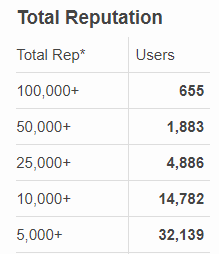
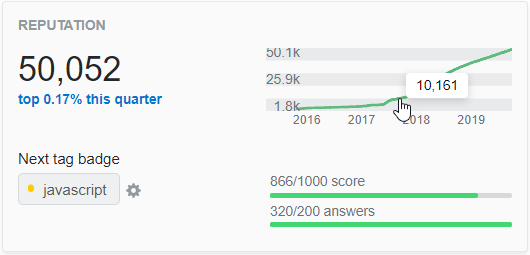
On StackOverflow, achieving 25k unlocks every privilege, such as closing or reopening questions. So I thought, why not aim for that? Reaching 25k took me another six months. After that, I largely stopped answering questions. But my earlier answers kept attracting views and votes, pushing me past 50k. Here’s a visual of my reputation growth:
Although I met my reputation targets, I never received a single interview invite. I sent applications to numerous companies through the site but got no responses. So StackOverflow turned out to be a poor job-hunting tool for me. Yet, after all that time in the source code and answering queries, I had absorbed a lot. That knowledge and those responses were ideal material for articles. So I considered whether to turn it into a blog post, or perhaps several.
Writing had always appealed to me; I just lacked a subject. Now I had a set of topics that had proven valuable to the community. Teaching is something I love, and blogging allows me to reach a much broader audience than any classroom. So I began to write.
Merging the pursuit of excellence with content creation
Producing written material is challenging and demands a significant time investment. Echoing my earlier routine, my early mornings and nights were filled with study and drafting. Since I was no longer replying to questions on Stack Overflow, I had roughly five hours each day for writing, in addition to weekends. I didn’t have a clear target for the number of pieces I wanted to produce. My only commitment was to publish one new piece per week.
After reaching a dozen articles and gaining my first thousand followers, I made the move to launch a publication. I called it Angular In Depth. Many startup founders claim they built something because they had a need that wasn’t being met. That rings true for me. At that time, no publication existed where you could explore the inner workings of the Angular framework. I imagined a space that offered all the knowledge required not just to master the subject, but to start contributing to it as well. My plan was to cover the toughest concepts alongside the nitty-gritty of implementation.
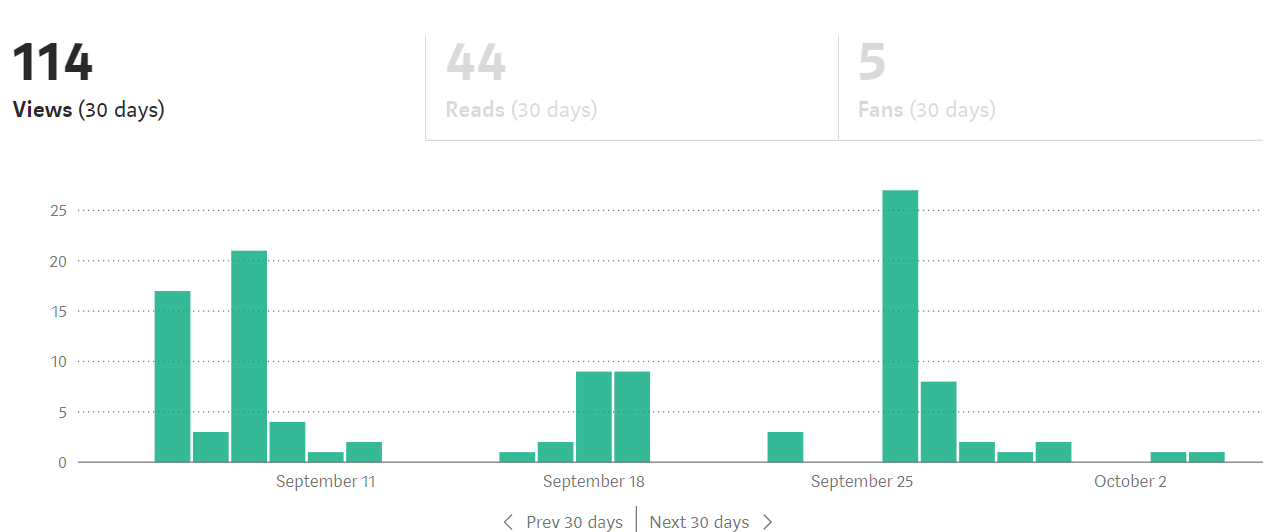
Anyone who has started blogging in recent years knows that cultivating an audience is a serious challenge. You can’t expect readers to show up after a handful of posts. In today’s era of content shock, there’s even a real risk that no one will stumble upon your piece. With no existing following, I picked Medium because it promised some degree of promotion. The early articles barely registered in terms of views or claps. It looked something like this:
Medium provided some assistance, but it became obvious that I needed to take promotion into my own hands. To broaden visibility, I opted to submit my work to larger venues such as HackerNoon and FreeCodeCamp. These outlets boasted tens of thousands of subscribers back then. While getting published on HackerNoon was relatively straightforward, it took around three months to land a piece on freeCodeCamp. I sent ten emails to Quincy Larson, mentioned him in five tweets, and then fired off a few direct messages. Most went unanswered. Quincy was the sole point of contact at that time, so I can only imagine the flood of emails and mentions he handled daily. Eventually, he did publish my article. Relentless persistence is definitely a key ingredient in success.
Still, even with those big audiences, the boost I anticipated never materialized. The main reason was that these communities were made up of developers working with other frameworks and they had little interest in Angular-related content. It’s disheartening to spend a couple of weeks on a piece and end up with barely any readers. That was an additional push for launching Angular In Depth. I wanted a venue dedicated to Angular and to people who cared about it.
Without promotion, something terrible happens… nothing!
— Barnum
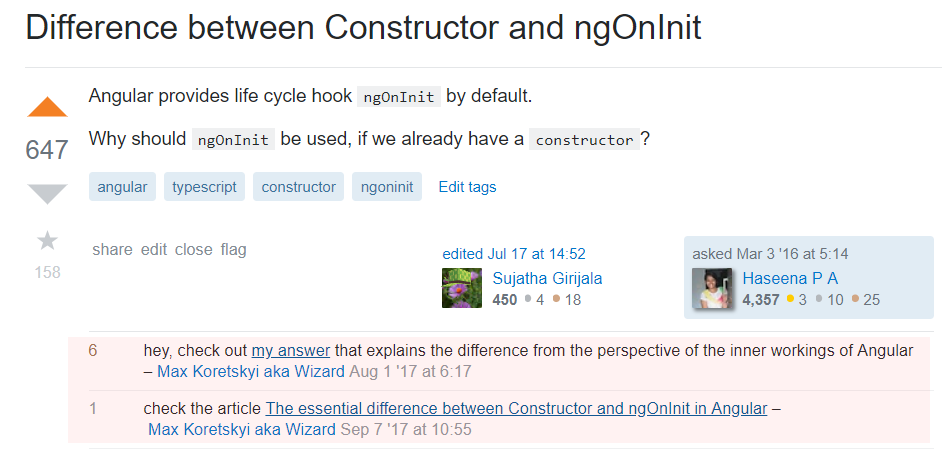
Once the publication was live, I began a focused push to spread the word. I shared links to my writings anywhere that seemed reasonable. I went deep into the dark side ?. Nearly every response I gave on Stack Overflow included a link to one of my posts – sometimes several. I’d also drop a link in the comments section. For instance, here’s a sample of my remarks on one of the most prominent Angular questions, which has been seen close to 300k times:
And here’s my answer loaded with article links inside the body:
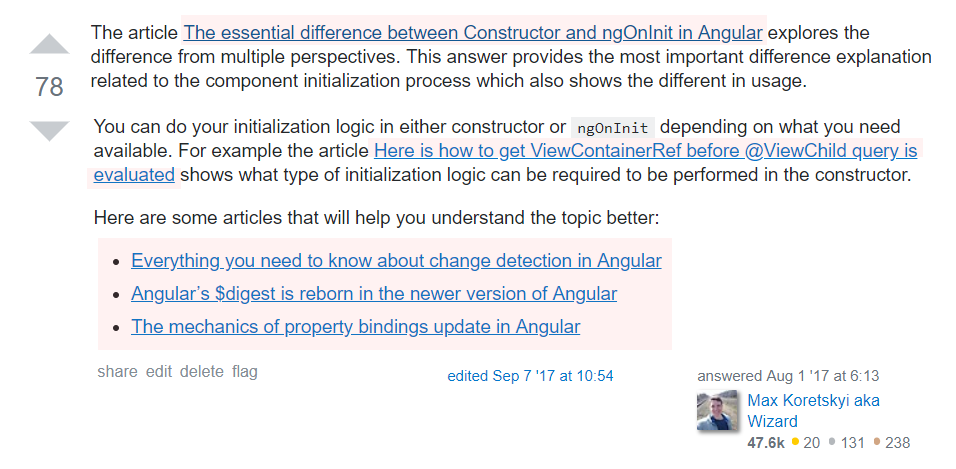
I made a habit of answering queries when I knew I could point to one of my posts. I also went through the most frequently viewed questions and added responses to those. If the topic was broad and I didn’t have a matching article, I would write one. That summed up my approach to building links.
To strengthen the visibility of Angular In Depth, I even changed my handle on StackOverflow to AngularInDepth.com. I also made sure to submit articles to Reddit and Hacker News.

A considerable portion of my traffic originated from Google searches. Some of my posts made it into the top three spots of search results. I suspect that was driven by the many do-follow links I had accumulated from SO. Search engines use these links to determine rankings. Most platforms that support content creation disallow this kind of linking. For example, a link placed in a tweet is no-follow. A link from one Medium post to another is no-follow. A link that points to your article from Stack Overflow is normally no-follow. Yet once an answer receives a certain undisclosed threshold of up-votes, the link in that answer turns into a do-follow. Nearly all of my answers have gathered dozens of up-votes. That, I believe, is what substantially aided my rankings.
Another route I attempted was reaching out to well-known people with big followings on Medium or Twitter, asking them to reference my work. That didn’t produce much for me – at least until I had made a name for myself. Steve Jobs once said, “I’ve never found anybody who didn’t want to help me when I’ve asked them for help.” My experience on these networks was quite different. For some reason, influencers with massive audiences tend not to share articles from people they don’t know.
That might be tied to protecting their reputations – they’ve built a large base and are thoughtful about what they endorse. By helping someone promote their work, you’re essentially putting your name next to theirs. You first need to validate the quality of their content, which takes effort. Providing detailed suggestions is an even bigger time sink. But what really gets to you is the quiet: no replies at all, even a simple acknowledgment. It’s possible they’re overwhelmed by requests. It’s also possible they’re just not present on these channels.
Receiving silence after sending tweets and emails is genuinely discouraging. But that doesn’t mean reaching out is pointless. Resilience matters. Respected figures like Jack Ma and John Paul DeJoria constantly talk about the importance of accepting rejection. It’s simply part of life. So I persisted and gradually connected with people who were genuinely glad to help.
I built a strong friendship with Uri Shaked after commenting on one of his articles and then connecting with him online. He pushed me to expand Angular In Depth and try my hand at conference speaking. He showed me how community plays into the tech space. It was after our discussion that I set my sights on becoming a Developer Advocate. Uri was also the first person to support my content on Twitter and the initial contributor to Angular In Depth. He also made an introduction to Shai Reznik, who shared some very useful tips about conference giving.
On StackOverflow, I crossed paths with Alexey Zuev. He clarified a lot of Angular internals for me and boosted my answers as well. I was pleasantly caught off guard when Asim Hussain reached out to say he was enjoying my articles. Hearing that made all the difference – every author wants their work to strike a chord. That message fueled even more writing on my part. Asim also helped me with many of my CFP submissions and was generous in answering my community-related questions. During a recent trip to London, I also got lucky to meet Dan Abramov. He took the time to go over my drafts and helped with promotion efforts.
If you want to be successful, be excellent. If you want the best the world has to offer, offer the world your best. — Oprah Winfrey
Excellence was always the bar I aimed for. Certain pieces took me literal months to put together. I’d frequently need to spend extensive time going through books or source code before I could find the right way to present a subject. I was determined to be recognized for thorough, original writing. I might lean toward perfectionism, but I do not allow the fear of imperfection to stop me from pressing publish. In everything I take on, I want to know I gave it my best shot. As Vince Lombardi put it, you may never reach perfection, but the chase itself can lead you to excellence. I’ve noticed that people seem more inclined to support you when they see how hard you’re working.
In time, the publication started to gain ground. The stats for my posts over the previous two years are shown in this chart:
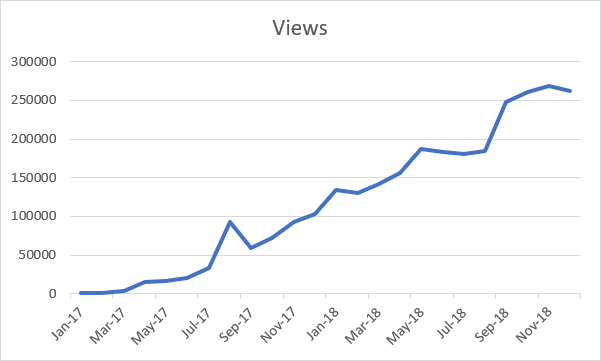
The picture here is pretty remarkable, with around 300% growth just last year. And those numbers cover only my own articles. As of now, my count stands at 67 pieces. That said, Angular In Depth is no longer just a personal blog. It’s evolved into a community of talented developers, and in the next section I’ll share how that shift came about.
Looking back, it’s clear how much my StackOverflow activity steered me toward blogging. Via the links placed in my answers, it also funneled a good deal of traffic toward Angular In Depth. And it served to polish my writing as well. Every day, I practiced explaining clearly and arranging my thoughts in a logical manner.

That mirrors how success tends to work in life. Similar to bamboo, which hardly seems to grow in its opening years. Then, all at once in the fifth year, it surges skyward and ultimately becomes one of the tallest plants around. You put in effort day after day. You learn something new day after day. You refine a skill day after day. The payoff won’t always be visible in the moment, nor is it clear when and where it’ll be useful. But I can assure you, once those abilities are yours, you will eventually find the right place to apply them as life moves forward. Steve Jobs famously said you have to trust that the dots will somehow connect in your future****.****
Creating the largest publication through collaboration
Despite the momentum, I remained uncertain about the future of Angular In Depth. The expansion was driven largely by my own writing, and after more than a year of intense output, I felt drained. During a conversation with Uri Shaked, I discussed the publication’s progress and my doubts about sustaining the pace. Uri urged me to keep pushing forward. He saw Angular In Depth as an established name within the Angular ecosystem and thought abandoning it would be a mistake. Energized by his words, I decided on a bold target: to make Angular In Depth the largest Angular publication anywhere.
I shared this ambition in a public post:
I'm trying to make @AngularInDepth a place for all @angular writers to publish content and get exposure. React has @freeCodeCamp with 300k followers, @angular needs one that big as well. Let's make it @AngularInDepth. If you're an @angular developer, support us by subscribing
— Max Koretskyi (@maxkoretskyi) July 23, 2018
It was obvious that this goal couldn’t be achieved single-handedly. Other contributors were essential. I’d occasionally feature pieces from writers who reached out directly, but steady growth required a dedicated group producing content regularly.
My approach was to scan Medium for strong articles and approach their authors about publishing through Angular In Depth. Writers tend to gravitate toward platforms with larger audiences. As our follower count crossed the 10k threshold, more authors became open to the idea. Before that, however, contributors were drawn by the caliber of existing work. Some had followed the publication for a while and relied on its material to solve real problems at work. They shared the mission and wanted to help realize it. Those are the collaborators you need when building something original — people who care deeply about the issue you’re tackling.
I’m grateful to Uri Shaked and Nicholas Jamieson for trusting Angular In Depth from the start, even when it was still obscure. Both were respected figures in the community, and their involvement did a lot to boost the outlet’s standing. Soon after, developers began reaching out on Twitter expressing interest in contributing. Among them were Tim Deschryver and Nate Lapinski, who eventually became two of our most prolific authors and core members of the internal group. I also heard from Todd Palmer, who now contributes articles as well as helping non-native speakers polish their grammar and phrasing. He was our first dedicated editor.
Until that point, communication with contributors happened individually, mostly via Twitter. I saw a need for a shared space where writers could brainstorm story ideas and exchange feedback before publication. This would allow drafts to be reviewed by peers before reaching a large readership. Less experienced writers could learn from seasoned ones. Yet I wanted to create more than just a writing hub. I genuinely enjoy seeing people grow, both professionally and personally. My vision was a community where each person assists others in reaching that kind of development.
A few months earlier, I’d been added to a Slack workspace used by GDEs for cross-talk. That model inspired me. I set up a similar channel for the Angular In Depth team. The first members were Tim Deschryver, Nicholas Jamieson, Uri Shaked, Todd Palmer and Alex Okrushko — the most active contributors to Angular In Depth. I also invited Jia Li and Alexey Zuev, who helped sort out some technical aspects.
Since then, over 20 people have joined the Slack workspace. Naturally, some members are less engaged than others. Still, I’m pleased to see participation growing steadily. The real magic isn’t when someone gets a comment on their draft. It happens when people start conversing with one another, bouncing around various subjects. No one can manufacture or force that kind of interaction. It springs up naturally. And I get to watch it happen daily in this group.
Curiously, when I asked prominent members what drew them in, most pointed to the standard of the material published on Angular In Depth. That quality sparked inspiration and a wish to belong. Having work appear next to other respected writers in the same publication gives them a sense of membership and brings genuine pride.
Yet it’s human to crave visibility. Spending weeks on an article and then watching only a handful of people read it is demoralizing. Conversely, the assurance that a solid audience will engage with every new piece is a powerful motivator. Today, more than 16k followers routinely read the new output from Angular In Depth.
Community-building is still something I’m figuring out. What seems clear is that you need a credible reputation before people will rally around you. Personal accomplishments are what inspire others to follow. After that, your role is to help those who join you improve. It’s about delivering real value. I work hard at that — offering technical critique, sharing advice, amplifying their work, and pushing them to take a more active role in the broader web dev scene. That visibility often leads to career advancements or worthwhile side projects.
I also gain plenty of emotional reward from this group. They are a remarkable collection of capable engineers who care intensely about web development. It’s the finest team of peers I’ve ever been part of. They’re driven and curious, ready to put in the work needed to develop and leave a mark. In many ways, they are like-minded kindred spirits. They give me support and the push to move forward.
Angular In Depth has expanded rapidly. Only a year back, the publication had 6k followers and just over 500k total views. It’s hard to wrap my head around, but that’s now our monthly view count. Overall, the publication has reached 5 million total views! There’s still plenty to accomplish, though. Over the coming year, the aim is to hit 1 million monthly views and a yearly total of 10 000 000 views.

Those stats please me, but what gratifies me more is that writers other than myself now generate roughly half of all the views. I’m thankful to every person who placed their work with Angular In Depth. It’s also worth noting that 850k minutes of reading represents over 1.5 years of collective time spent with our content. That’s roughly equivalent to having 70 people dedicated full-time to reading the material.
Why public speaking became the next milestone
Looking back, I can’t point to a single moment when I decided to pursue conference speaking. It was more of a gradual build-up. I had regular conversations with Uri Shaked and Asim Hussain, both of whom were already active speakers. Conference talks often sparked ideas for my writing. I’d also see tweets from others sharing their experiences on stage. Over time, the desire to do this myself simply took root.
Mark Schaefer makes a compelling case in his book “Known” that public speaking is the quickest route to visibility. It puts you in front of a live audience, and nothing builds awareness or establishes credibility quite like speaking in person. Conferences also provide a fertile ground for networking. You get to engage in meaningful discussions with peers, industry veterans and respected thinkers. These face-to-face encounters deepen the connections you’ve already made online, say on Twitter. My usual approach before any conference is to post about my attendance and schedule a few meetups in advance.
That said, you sometimes encounter people you’d never anticipate. At FrameworkSummit, for example, I was introduced to Patrick, a YCombinator alum, by Joe Eames. Patrick’s startup tipe.io was one of the sponsors. He offered plenty of valuable guidance about YCombinator and my own plans for the future.
There’s a common path where people write a book first and then move into speaking. But the tech community is full of meetups, making it far more accessible to start speaking. Many meetups even record talks and publish them in high quality, which lowers the barrier even further. Interestingly, I skipped the meetup circuit entirely and went straight to conferences. I also haven’t published a book yet, though it remains an ambition. Despite having no prior speaking credentials, I was accepted at every conference I applied to. I think my writing background played a big part in that. The reputation I built through Angular In Depth, much like the one I’d built through StackOverflow, opened these doors. By the time I submitted proposals to NgVikings and NgConf, I had already made a name for myself in the Angular community. I also took care to note in every application that several of my articles ranked in the top 3 search results.
Connecting with event organizers before applying is something I can’t recommend enough. They can offer excellent advice and are often willing to look over your proposals. Just having a conversation with them can give you a real confidence boost. Joe Eames, Pete Bacon Darwin and Maxim Salnikov were instrumental in getting me started. Maxim organizes NgVikings, which became the first conference to accept me. Joe oversees ng-conf, the largest Angular conference worldwide. On New Year’s Eve last year, he was going over my proposal to make sure I had the strongest possible application. It worked. And Pete, who organizes AngularConnect, helped me refine my latest proposal as well.
Those who dare to fail miserably can achieve greatly.
— John F. Kennedy
I know that putting yourself out there isn’t easy. Not everyone is naturally outgoing, and rejection is part of the game. But it’s important to keep pushing and take advantage of whatever chances come your way. Take how I met Joe Eames, for instance. I was a guest on Adventures in Angular, where Joe was a panelist. This was around a year back. I’d just started considering speaking opportunities and barely knew anyone in the community. When the show wrapped up and most people had left, I asked Joe if he could stay a bit longer for a chat. I had some questions about the community. To break the ice, I asked what he did for a living. He listed off his work and, almost in passing, mentioned he co-organized ng-conf. Quite the lucky break. I wasted no time asking if he’d review my proposals. Fortune often works that way — you never know when a chance encounter will change your trajectory. Joe was incredibly generous, even reviewing several of my CFPs on New Year’s Eve!
Once I got the acceptance, the real work began. Mastering public speaking usually takes years of practice. Not having that kind of experience, I decided to overcompensate with sheer preparation time. Judging by the views and likes my talks have gotten, the approach seems to have resonated with the community.
For each talk, I set aside roughly 2–3 full weeks. This covers researching the topic, structuring the presentation, writing it out in full and recording myself. I go through the recording, listening closely, and make revisions. Then I record the updated version and share it with colleagues for their input. After gathering their thoughts, I refine it further. The final stage is memorization, followed by rehearsing around 15–20 times. I aim to have every line committed to memory so I’m not fumbling for words during the actual talk. Sarah Drasner rehearses to the point where she can’t bear her own voice. Then she goes for a little more.
There’s still plenty of room for me to grow as a speaker. I’ve begun putting effort into my accent and overall English fluency. Theater classes are on my list to work on stage presence. I’d like to feel more relaxed on stage and smile more naturally. Also, I want to get past the worry of making grammatical slips and open myself up to more spontaneity during presentations. Events like ng-conf are great because they offer access to professional speaking coaches. I made use of that last time and I’m hoping for another session this year.
Landing a job I genuinely love
Remember how I wanted to land a remote position with a UK or US company, which was what pushed me to be active on StackOverflow? Well, about six months ago, that ambition finally became a reality. At the start of the summer, I joined ag-Grid as a Developer Advocate.
I’m convinced that this opportunity came about because of everything I had been doing over the previous two years. And I can honestly say it’s the best employer I’ve had. It’s a smaller company, and that brings several distinct advantages.
For one, my work directly influences how the company performs. That’s a point Asim Hussain made a number of times when I asked for his input on this role. Seeing the impression, visitor, and lead metrics that my efforts produce is genuinely satisfying.
Additionally, I work side by side with the founder, Niall Crosby. It might sound like a stretch, but he’s the best boss I’ve ever worked with. I’ve picked up a tremendous amount from him. He’s both sharp and straightforward, which means I can be straightforward with him in return. Our conversations about what it takes to grow a company from zero are something I really value—he’s given me fresh ways to think about life. He even took the time to look over this article before publication. During our first chat, Niall mentioned that if your dreams don’t scare you, they’re not big enough. I’ve always thought in big terms, and that remark immediately made me respect him.
Finally, this role lets me sharpen multiple skill sets at once while also pursuing personal projects. I tend to view my time at ag-Grid as a collaboration. My primary focus is on getting people to know about our products—which is marketing, my original field. But the way I do that is by writing and speaking about technical subjects, which pushes me to grow as a technologist. So both sides of my profile get stronger at the same time. What’s even better is that Niall encourages me to publish on Angular In Depth and React-In-Depth. That arrangement benefits me, the Angular In Depth community, and the company all at once. Having an employer who supports that kind of work is unbelievably motivating—so much so that I often find myself working weekends and late nights without complaint. I’m curious whether this kind of setup can be found elsewhere. I might start looking into that before long.
So how did this role come about? Once Angular In Depth started gaining traction, companies began reaching out to ask about writing guest posts. ag-Grid was one of them. As is my habit, I set up a meeting to talk through the details. During that call, I also asked whether ag-Grid might be open to sponsoring Angular In Depth, or whether they might even need someone to write for them. Afterward, I followed up with an email containing the publication’s stats and a few suggestions for where I could add value.
Niall spent the weekend reading through my articles—and, from what he told me, he really liked them. That’s where my unwavering commitment to quality paid off again. But what impressed him even more was the work I had put into Angular In Depth and the momentum it had built. He was open to discussing some kind of collaboration. He wanted me to replicate that success for ag-Grid. While that goal has shifted over time, I’m confident that Angular In Depth’s rapid rise was a big factor in Niall’s interest.
I told him what I wanted to earn, and it wasn’t a modest figure. Niall’s view is that a team should be based locally, and that remote work doesn’t make sense early on in a company’s life. If we were to go the remote route, the pay would need to match local rates. That felt reasonable. But my argument was that I’d be doing work no one else could do, regardless of where I was located. After a few rounds of emails, we found a creative setup combining sponsorship and bonuses that brought my compensation to the level I was after. That was my financial target from when I started on StackOverflow nearly two years ago—and finally, it was hit.

That wraps up my two-year journey. What comes next? The paths ahead of me feel wide open. I’m more hopeful about what’s to come than I was back when I first started out.
If I keep writing and speaking on tech topics, there’s a chance I could become a thought leader or influencer in the field. If I pursue that, I definitely want to write a book about web development. I’ll probably also try organizing conferences in Ukraine. Or I might shift toward coaching. That’s something I’m truly passionate about—watching other people grow is deeply rewarding. I’ve already started monthly mentoring sessions with developers. It’s early days, but the signs are promising.
Ideally, I’d love to merge my passion for coaching with technology. After my first startup attempt didn’t work out, I’ve never stopped thinking about building another one. Hardly anything succeeds on the first try. Niall once mentioned that ag-Grid is his fifth attempt at starting a company. I think there’s potential to turn Angular In Depth into some kind of learning platform. I don’t yet know exactly what it would look like or do. Maybe something like Pluralsight, but with a text-first approach rather than video. Or perhaps something closer to StackOverflow with a mentorship component.
This venture could fail, just like my first one did. As I’ve shown throughout this article, you never know where your efforts will lead. But it feels much better to have tried. To know you gave it a real shot. To take that kind of risk. Aim for something meaningful with your life. That’s never wasted effort.
The fear of failure is always there in the back of my mind. Cus D’Amato, the man who coached Mike Tyson, used to say the difference between a hero and a coward is what they do, not what they feel. Both feel fear. So I’ll keep moving forward despite the fear and hope things fall into place. But first, we all have to trust that the future will be better. As Steve Jobs said, we have to believe in something—our gut, destiny, life, karma, whatever. Even if it doesn’t work out, I know I’ll gain invaluable experience, and I’ll use it when the next door opens.
And yet, it might succeed. My odds are better this time because I’ve learned so much since my last attempt. At ag-Grid, I’ve picked up practical knowledge about SEO and content marketing. I now have a community of highly skilled developers through Angular In Depth who could help me build something real. And there’s a huge number of readers following the publication who might be willing to test out my ideas.
I didn’t write this article to lay out a step-by-step guide for becoming known in the tech world. Peter Thiel points out that the next Bill Gates won’t build an operating system. The next Larry Page won’t create a search engine. The next Mark Zuckerberg won’t start a social network. If you’re just copying those people, you’re not actually learning from them. My goal here was to share my story in the hope that it nudges you to keep improving and to look for ways to apply what you know across different areas.
Whatever path you pick, there are a few things worth holding onto. You have to believe in yourself. Over the years, I’ve been told I wasn’t a strong programmer, that I was out for myself, and that I wasn’t a good team lead. But that doesn’t appear to have been the case. In just two years, I’ve helped and encouraged a large number of people—directly and indirectly—through articles, StackOverflow answers, conference talks, and one-on-one conversations. I’ve also brought together a fantastic team of engineers at Angular In Depth.
You need to have a vision for where you want to go, and trust that what you’re doing right now will get you there. You need to read books that change how you see work and life****.**** You need to push for excellence, stand out, and do things others won’t. You need to work hard and try to enjoy the ride. You need to find people who lift you up and inspire you, and not let rejection stop you. You need to stay curious about what you do. And you need to acknowledge the part luck plays in everything, and trust that if you put in enough effort, luck will eventually find you.